
by Sergio Bellucci
I. Historical Materialism as a Key to Understanding Schism
In an Age of Transition, the classics come to our aid if we know how to interpret their “method” rather than their conclusions rooted in their own time. Marx and Engels, for example, wrote in the 1848 Manifesto that the history of every society is the history of class struggles. Applying this statement to religious history is not an exercise in reductionism but in profound hermeneutics: it means asking not only what is being contested in great ecclesiastical ruptures, but who wins, who loses, which structure of accumulation is being challenged or defended, and which social class benefits from the outcome. And, ultimately, which institutional model the resulting form of power will conform to.
Historical materialism does not deny the theological dimension of schism—it would be foolish to do so. More precisely, it argues that theology functions as an ideological form within which real contradictions are fought out: contradictions of power, wealth, the production of meaning in life connected to the possibilities of commerce, and control over social reproduction. What Marx called the Überbau—the superstructure—is not merely an ornament of economic power: it is the terrain upon which the contradictions of the structure are processed, legitimized, and contested.
Two schisms, separated by five centuries, offer an extraordinarily powerful comparative historical laboratory: the Lutheran schism of 1517 and the crisis that, on July 1, 2026, on the field of Écône in Switzerland, will lead the Society of Saint Pius X (FSSPX) toward a new rupture with Rome. Leo XIV has already informed the Lefebvrists that the announced episcopal ordinations will lead to a definitive break: excommunication. This was confirmed by the Holy See Press Office on May 13, 2026, through a statement signed by Cardinal Víctor Manuel Fernández, Prefect of the Dicastery for the Doctrine of the Faith.
The “Marxian” question is: who supports it, who benefits, and what transition in the mode of production lies in the background?
II. The Lutheran Schism: The Fugger Bank, St. Peter’s Basilica, and Emerging Capitalism
2.1 The Financial Mechanism of Indulgences
Traditional historiography portrays the Lutheran schism as a theological conflict: justification by faith alone versus the system of works and indulgences. This narrative is true but incomplete. Beneath the doctrinal level operated a financial machine of remarkable complexity, involving the most powerful bankers in Europe.
In the early years of the sixteenth century, Pope Leo X (perhaps a coincidental analogy, though some claim there are no coincidences…) promoted a major sale of indulgences in Germany to finance the construction of St. Peter’s dome. Yet the mechanism was even more intricate: Archbishop Albert of Brandenburg, facing financial difficulties due to the purchase of the Archbishopric of Mainz, obtained a loan from the Fugger bankers. To repay this debt, he received papal authorization to preach and sell indulgences within his dioceses.
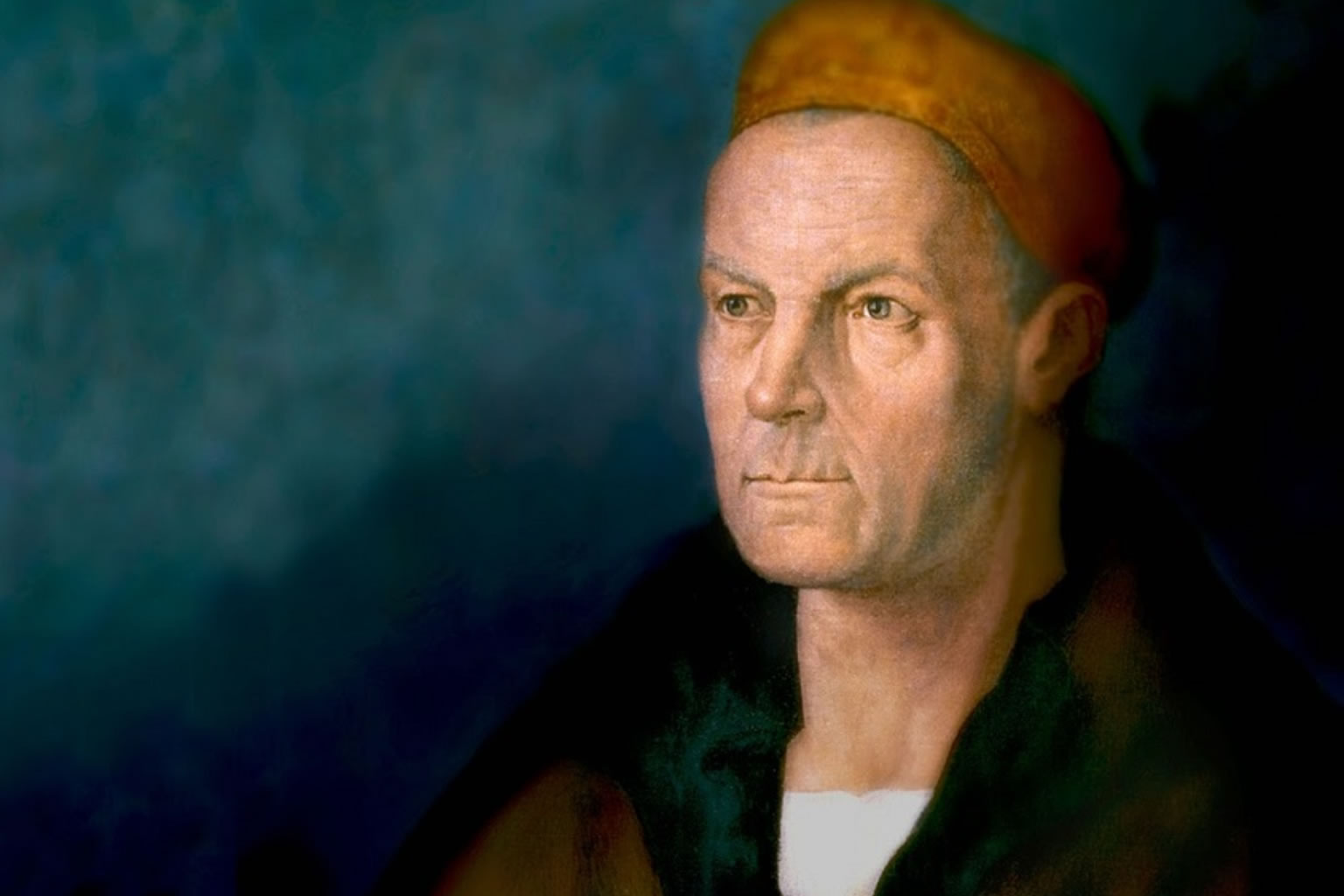
The Fuggers of Augsburg—the most powerful banking family in sixteenth-century Europe—thus became the financial hub of the schism. The system worked as follows: Albert of Brandenburg borrowed from the Fuggers to purchase the episcopal office (financed simony); Rome authorized the sale of indulgences in the German dioceses as a repayment mechanism; half of the proceeds went to Rome for the Basilica, while the other half was used to repay the Fuggers. Johann Tetzel, the Dominican preacher, served as the traveling salesman of this spiritual-financial operation.
The sale of indulgences was tied to the financial crisis of the Papacy: Pope Leo X proposed the remission of sins through monetary contributions. In Marxian terms, this means that divine grace had been transformed into a commodity, with an exchange value determined by supply and demand in the marketplace of salvation.
2.2 The Class That Benefited from the Reformation
Luther attacked this financial machine using theological tools, but the social vector of the Reformation was determined by the class structure of sixteenth-century Europe. The emerging social class, which drove the commercial and financial development of Europe during the sixteenth century, tended to perceive the doctrinal and institutional apparatus of the medieval Church as excessively rigid, distant from everyday life, and poorly suited to the new and expanding mercantile economic dynamics.
The German princes saw in the Reformation a tool to secularize ecclesiastical wealth and free themselves from Roman-imperial hegemony. The Church retained enormous landed properties, but the new rulers opposed the outflow of resources toward Rome. The Lutheran schism was therefore supported—at its deepest structural level—by the conflict between ecclesiastical feudal rent and emerging mercantile capital, fought on the theological terrain of grace and faith.
Max Weber would later, in The Protestant Ethic and the Spirit of Capitalism (1905), reverse the causal arrow: it was not capitalism that produced the Reformation, but the Reformation that culturally produced capitalism. The Marxian and Weberian analyses, in my view, are complementary rather than contradictory: the Lutheran schism was the moment in which economic structure and ideological superstructure co-determined one another in an epochal transition of the mode of production.
III. The Lefebvrist Schism of 2026: What Economic Structure?
3.1 The FSSPX as an Organization: Size and Resources
The Society of Saint Pius X is not a small community of nostalgics. It currently consists of 2 bishops, 733 priests, 264 seminarians, 145 brothers, 88 oblates, and 250 sisters, with its headquarters in Menzingen, Switzerland. It manages seminaries, schools, and chapels throughout the world: a transnational institutional network with substantial real estate assets and a faithful base estimated in the hundreds of thousands. Since 2018, the Society has been led by the Italian Fr. Davide Pagliarani, close to Alfonso de Galarreta, one of the four bishops ordained by Lefebvre and representative of a more uncompromising line less open to dialogue with Rome.
But the relevant “Marxian” question does not concern the Society’s internal resources, but rather the external power bloc that strategically aligns itself with its struggle and with the social process upon which it rests and which it helps generate.
3.2 Algorithmic Capital and Traditionalist Catholicism
The structural novelty of the 2026 schism, compared to 1988, is the emergence of a new actor: the class that owns algorithmic infrastructures—the so-called Silicon Valley tech billionaires—which in recent years has developed an organic alliance with North American and European traditionalist Catholicism.
The National Catholic Reporter and The Daily Beast reported that in 2020 DonorsTrust, a conservative funding vehicle regarded by many analysts as “opaque,” channeled funds to various traditionalist Catholic parishes and dioceses, religious freedom organizations, and Catholic colleges. DonorsTrust is the preferred vehicle of donors such as Leonard Leo, who controls a network of nonprofit organizations and is known for quietly reshaping the U.S. Supreme Court by advancing conservative judicial candidates. Leo is a conservative Catholic, and his financial network intersects structurally with the world of Catholic traditionalism.
Yet the most significant phenomenon is the relationship between Silicon Valley and intransigent Catholicism. JD Vance, who built his political identity around the Catholic faith, converted to Catholicism in 2019 partly under the influence of Peter Thiel. Thiel—a right-wing billionaire and a leading figure in Big Tech, mass surveillance, and venture capitalism—has been Vance’s mentor, employer, and financier.
Peter Thiel is the key figure for understanding the economic structure of the current schism. Co-founder of PayPal and Palantir Technologies—the latter one of the world’s leading AI data analytics companies, with deep ties to U.S. intelligence agencies—Thiel has developed an extraordinarily significant ideological synthesis. He combines traditionalist concerns with hyper-modern techno-utopian aspirations, filtered through a heterodox interpretation of Christian eschatology. This fusion is characterized by the desire to interpret ancient scriptures as a means of engineering a radically different future.
In March 2026, Thiel held a series of closed-door conferences in Rome on the concept of the Antichrist applied to AI. Participants, by invitation only, came from academic, technological, and religious circles. The visit attracted the attention of the Catholic Church, which under Pope Leo XIV openly criticized some of Trump’s right-wing policies and warned about the dangers of AI. Father Paolo Benanti, the Pope’s advisor on artificial intelligence, wrote that Thiel operates as a “political theologian” in Silicon Valley and that “Thiel’s entire project can be read as a prolonged act of heresy against the liberal consensus: a challenge to the very foundations of civil coexistence.”
3.3 The Structural Alliance: Tech Bros and Culture-War Catholics
In Laudato Si’, Pope Francis denounced the “technocratic paradigm”: the toxic way in which technology, libertarianism, and efficiency become an unquestionable and relentless law of power, disruption, and progress—regardless of the most fundamental claims of justice and love.
This critique strikes directly at the core of the alliance currently taking shape. Figures such as Elon Musk, Peter Thiel, Marc Andreessen, and others have supported the shift toward Trumpian post-truth politics, which promises the end of the American left’s cancel culture, less regulation of technology, and a democracy hanging in the balance. Marc Andreessen, in his 2023 “Techno-Optimist Manifesto,” written in the style of biblical prophetic texts and concluding with a list of new tech “saints,” stated: “Technology is the glory of human ambition and achievement, the spearhead of progress, and the realization of our potential.”
This alliance is neither accidental nor merely cultural: it has a precise economic structure. The owners of AI infrastructures—the means of algorithmic production, to use an extension of the Marxian category—require a regulatory, political, and cultural framework that minimizes regulation, delegitimizes national and supranational institutions which, as products of democratic processes, are considered “progressive” (including the papacies of Francis and now Leo XIV), and elevates an alternative spiritual authority that is localized, hierarchical, and anti-universalist.
Traditionalist Catholicism—in its Lefebvrist forms but more generally across the entire spectrum of integralist Catholicism—offers precisely this: a system of ideological legitimation for a post-democratic power structure, founded upon “naturally-artificial” hierarchy, tradition, hostility toward cosmopolitanism, international law, peace, and equal rights among human beings, all of which are labeled as “ideological” and “progressive.”
IV. A Proposed Analysis of the Relationship Between Structure and Superstructure in the Two Schisms
4.1 The Transition of the Mode of Production as the Constant Background
A comparative tableau can now be constructed:
In 1517, the fundamental contradiction was between the ecclesiastical feudal mode of production—based on landed rents, control over the market of salvation, and the accumulation of offices and benefices—and emerging mercantile capitalism, which demanded de-feudalization, capital mobility, and freedom of conscience understood as freedom of contract. Before a “Reformation” of institutions of power, the objective was to transform the principal “agency of socialization” (and socio-political legitimation, one might say) of the era’s “meaning of life”: religion. To change the factors producing “meaning” in order to construct the “consensus” required by the new socio-economic framework.
In 2026, the fundamental contradiction lies between surveillance and algorithmic capitalism—based on data capture, the extraction of algorithmic surplus value, and the monopolistic concentration of digital infrastructures—and global regulatory institutions (the European Union, UN agencies, but also the post-conciliar papal magisterium with its documents on AI such as Antiqua et Nova), which seek to impose ethical, redistributive, and governance limits on AI capitalism. This process tends to merge the twentieth century’s agencies of socialization of the meaning of life (newspapers, radio, television, and later the web) with a religious form that “justifies” and supports the idea of a single man in command, perhaps invested with a divine “authority.” A sort of return to a time even prior to Hobbes.
In Marxian terms, this can be summarized as follows: Luther broke ecclesiastical feudal rent in the interest of mercantile capital; the lords of the algorithm support the Lefebvrist schism in the interest of algorithmic capital against the institutions that regulate democracy. To borrow from the cycle of political forms described by Polybius in the Anacyclosis (Democracy, Ochlocracy, Monarchy, Dictatorship, Aristocracy, Oligarchy, Democracy, and so on…), as we witness the decline of democratic forms that increasingly place us within Ochlocracy, the historical outcome looming ahead would be that of a single man in command.
Fortunately, today the planet is increasingly interdependent, making such an outcome appear entirely impossible. This does not mean, however, that mechanisms of democratic participation can afford to ignore the ongoing Transition.
4.2 The Role of the Banker: From the Fuggers to Palantir
The parallel between Jacob Fugger and Peter Thiel should not be dismissed as a rhetorical metaphor: it is a precise structural homology.
Jacob Fugger was the banker who financed the purchase of ecclesiastical offices, profiting first from the indulgence system and later—indirectly, through the crisis it triggered—from Protestantism. His interest lay in controlling the networks of European power through lending and credit.
Peter Thiel is the venture capitalist who finances political candidates (Vance), builds intellectual networks (conferences on the Antichrist in Rome), supports conservative religious movements, and constructs—through Palantir—the AI infrastructure of state surveillance. His interest lies in controlling global networks of power through data and algorithms.
In both cases, financial power uses the ecclesiastical crisis as a geopolitical lever: not because it is interested in theology itself, but because the configuration of religious power determines the configuration of political power and, ultimately, economic power.
4.3 The Role of the Press: Gutenberg and X/Twitter
A further structural homology concerns the means of cultural production. The Lutheran Reformation would not have been possible without Gutenberg’s movable-type printing press (1450): the Ninety-Five Theses spread throughout Germany within a few weeks thanks to the new information technology. Printing was the means of cultural production that emancipated the written word from monastic and clerical control.
Today, Elon Musk’s X platform—acquired in 2022 and restructured to amplify conservative and traditionalist voices—is the digital printing press of the contemporary schism. It is no coincidence that the most perceptive commentators on the FSSPX crisis, the mobilizations of traditionalist Catholics, and the campaigns against the magisterium first of Francis and now of Leo XIV find in Musk’s social media platform their primary vehicle of dissemination.
The reality is that today vast technological systems of wealth and power depend for their survival on the denial of empathy and the creation of enemies. The explosion of the era of post-truth, fake news, deepfakes, and the power of social media bots to relay carefully crafted communication flows through millions of messages in order to shape the “meaning” assigned to events, supplants processes of perceiving reality by obscuring what must be hidden and highlighting and directing social discourse toward the desired “consensus.”
4.4 The Paradox: Traditionalists Defend the Order of Their Enemies
Here emerges the deepest internal contradiction, one that a rigid Marxian reading cannot fully capture but that a more attentive dialectical analysis illuminates: traditionalist Catholics and algorithmic capitalists are tactical allies within a strategic contradiction.
The Lefebvrists desire a pre-modern world: the Tridentine Mass, organic hierarchy, the medieval corporate order—a world that capitalism, first mercantile and then industrial, destroyed and that algorithmic capitalism is now dismantling even further at exponential speed. Yet they find themselves in the same camp as Thiel and Musk, who are among the principal architects of algorithmic capitalism.
The resolution of this paradox is Gramscian rather than merely Marxian: the alliance is a historical bloc—a coalition of social forces whose long-term interests diverge but whose immediate interests converge—united by hostility toward the same enemy: progressive universalist institutions (the post-conciliar papacy, the European Union, the United Nations, and AI regulators). As Gramsci wrote in the Prison Notebooks, the historical bloc is the unity of structure and superstructure: not an identity, but an articulation of forces that remain together as long as the common enemy endures. And it often produces forms of hybridization that would have been impossible to foresee at the outset.
V. Algorithmic Surplus Value as the New Seller of Indulgences
According to a proposed model for structuring the current composition of value—the formula C’ = [c_f + c_k] + [v_h + v_a] + [p_h + p_a]—algorithmic capitalism (now increasingly defined as Digitalism, the mode of production that places data at the center of the valorization process) produces a specific form of surplus value extracted not only from human labor but also from the combination of living labor and algorithmic dead labor (v_a and p_a). This formula finds a new historical application here.
In Marxian terms, sixteenth-century indulgences were a mechanism for extracting surplus value from a sphere—that of spiritual salvation—artificially removed from market competition through the ecclesiastical monopoly. The price of an indulgence was not determined by its use value (the remission of sins) but by the Church’s monopolistic power over the good in question.
Twenty-first-century algorithmic capitalism reproduces this structure: users’ personal data are a resource extracted free of charge (like the “unpaid labor” of the believer who confesses and “purchases” grace), processed by AI infrastructures (like the theologian who certifies the value of an indulgence), and resold as algorithmic surplus value to advertisers and governments. The monopoly is no longer over the market of salvation but over the market of attention and behavioral profiling.
In both cases, the mechanism of ideological legitimation—the theology of indulgences in the sixteenth century and “algorithmic neutrality” in the twenty-first—serves to obscure the extractive nature of the process. And in both cases, schism emerges when part of the system perceives the unsustainability of the previous mystification and seeks to construct a new one capable of concealing its historical function.
VI. Leo XIV as a New Adrian VI?
This analogy raises enormous questions about the present. Adrian VI, the Flemish pope elected in 1522 in an attempt to reform the Church and respond to the Lutheran challenge, failed miserably: too reformist for the Curia, too late for Luther. He died after less than two years as pope, leaving Rome exactly as he had found it.
Leo XIV—the first American pope, elected in 2025—finds himself in a structurally analogous position. Too critical of AI capitalism for figures such as Thiel and Musk (he has warned about the dangers of AI and opposed certain right-wing policies of Trump), too “institutionally democratic” for Lefebvrist traditionalists, and now forced to manage a schismatic crisis that represents the first major internal challenge of a pontificate that from the outset has invoked unity.
The Holy See has proposed “a specifically theological path of dialogue, with a clearly defined methodology,” to address the issues raised by the FSSPX. The Society cannot criticize Rome for having rejected the 2019 proposal while simultaneously denying any value to the similar proposal of 2026. What is evident is that, for the FSSPX, doctrinal dialogue is desirable when it does not entail immediate practical consequences, but becomes unacceptable when it requires the suspension of episcopal consecrations.
The stalemate is perfect. And its perfection is, in Marxian terms, structural: it cannot be resolved by individuals of good will because the contradictions that fuel it are not individual but systemic.
VII. Conclusion: The Law of Schisms as the Law of Modes of Production
Five hundred years of history separate the Theses of Wittenberg from the field of Écône. Yet the underlying structure remains the same: every major ecclesiastical schism is the ideological reflection of a crisis within the economic structure of its time; every theological rupture is also—not only, but also—a restructuring of the dominant social power bloc; every excommunication is the act by which an institution defends its function of ideological mediation against those who challenge it.
Luther served—unintentionally—the mercantile bourgeoisie and the German princes against Roman feudal rent and the Fuggers. The Lefebvrists of 2026 serve—also probably without full awareness—the owners of algorithmic infrastructures against universalist regulatory institutions, including a papacy that has dared to criticize the “technocratic paradigm.”
History does not repeat itself, Marx wrote, yet it does repeat itself: the first time as tragedy, the second as farce. Or perhaps—and this is the harsher interpretation—it repeats itself as a system: with different actors, different costumes, different theological languages, but with the same grammar of power and money governing, beneath the surface of the sacred, the profane movement of history.


